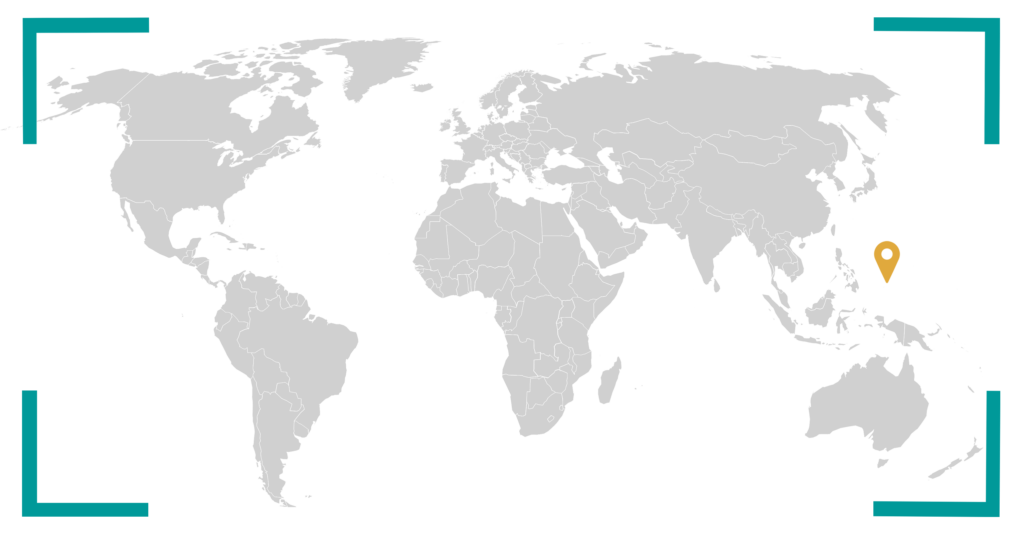
Palau, a small island nation in the western Pacific Ocean, is famous today for its crystal-clear lagoons, dramatic coral reefs, and some of the world’s best wreck diving. Beneath its calm tropical waters, however, lies the legacy of one of the fiercest campaigns of World War II. During the war, Palau was occupied by Japan and became an important military stronghold guarding sea routes between the Philippines and the Japanese Empire. Airfields, naval bases, and supply depots were built throughout the islands, turning Palau into a critical defensive position in the Pacific.
In September 1944, American forces launched the Battle of Palau as part of a broader campaign to retake the Philippines and push Japan back across the Pacific. The fighting centered mainly on the islands of Peleliu and Angaur, but the entire archipelago became a battlefield. Before the landings, U.S. Navy carrier aircraft carried out massive bombing raids against Japanese ships, aircraft, and military facilities around Koror and Malakal Harbor. These attacks devastated Japanese defenses and left dozens of ships and aircraft destroyed beneath the lagoons. Many of the wrecks that divers visit today are direct remnants of those intense air raids and naval battles.
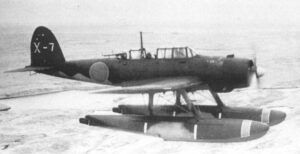
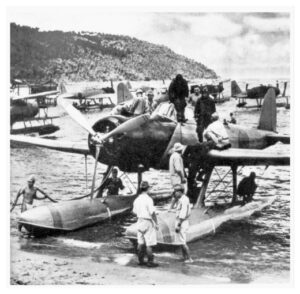
One of the most famous wreck dives in Palau is the Jake Seaplane, a remarkably preserved Japanese floatplane resting in shallow water near Malakal Harbor. The aircraft is an Aichi E13A, known by the Allied reporting name “Jake.” Built by the Aichi Aircraft Company, the E13A was the Imperial Japanese Navy’s primary long-range reconnaissance seaplane during World War II. Designed for scouting missions, the aircraft was used to locate enemy fleets, patrol shipping lanes, direct naval operations, and occasionally carry light bombs for combat missions. Its large pontoons allowed it to take off and land directly on water, making it especially valuable for operations across the Pacific islands where conventional runways were limited.
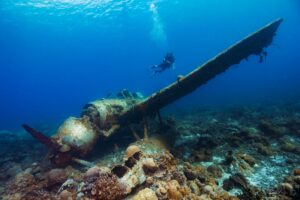
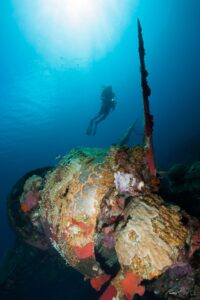
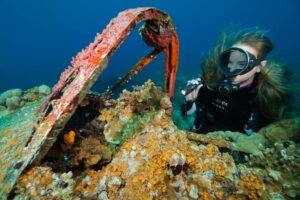
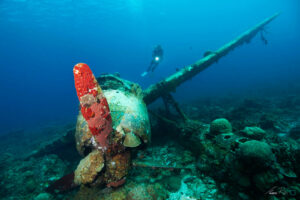
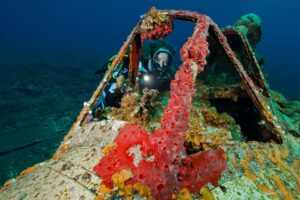
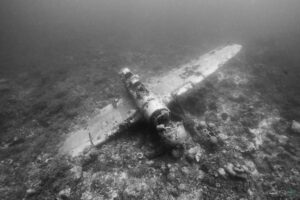
The Jake Seaplane wreck is believed to have been destroyed during the American bombing raids on Palau in 1944. Damaged either while moored in the harbor or during an attempted evacuation, the aircraft eventually sank to the lagoon floor, where it has remained for more than eighty years. Today the wreck sits upright in about 15 meters (50 feet) of water and is still easily recognizable. Divers can clearly see the fuselage, wings, engine, and twin floats, now covered with coral and surrounded by schools of tropical fish. The site combines history and marine life in a uniquely powerful way: what was once a weapon of war has become an artificial reef and underwater memorial.
For divers visiting Palau, the Jake Seaplane is more than just a wreck dive. It is a direct connection to the Battle of Palau and the larger Pacific War, preserving a moment in history beneath the lagoon’s calm blue surface. The aircraft stands as a reminder of the strategic importance of Palau during World War II and of how nature slowly transforms even the machinery of conflict into part of the ocean itself.
Then and now – a comparison of the intact Aichi E13A “Jake” (photos: Wikipedia) and the world famous dive spot in Palau.
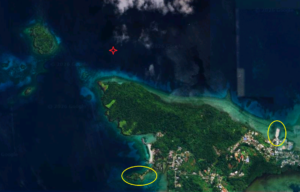
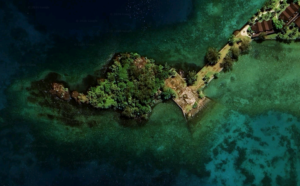
Traces of the old seaplane bases can be still found today. While the red cross marks the position of the “Jake seaplane” dive site, the yellow circles show the former ramps, where the seaplanes have been entering the water. The right satellite image shows clearly the concrete ramp and is located just nearby Palau Pacific Resort.
Satellite images (Google maps) of the former seaplane base at Meyungs island near Malakal harbour , 2026
The secret second Jake – hidden just below the surface
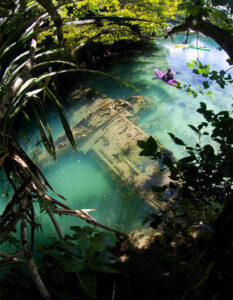
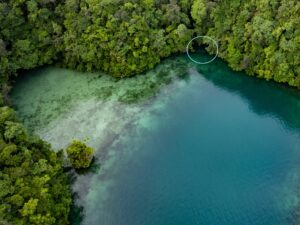
Just a few miles away there rest a second Jake aircraft just below the surface, hidden in a secret lagoon of Palau. Just before departing towards Palau, I found an amazing picture of a plane wreck in very shallow water. Unfortunately, I could not find out the exact location it while doing some research in the internet. Being in Palau, I took the chance to talk some locals and finally I figured out, where it is. While it is quite complicated to go there, at least I could get an aerial image of the location. If you have a close look, you can see the shape of the sunk plane resting in the small hidden corner of the lagoon (circled area). It is said that nearby in the shallow water there are even some more aircraft engines. Whenever I come back to Palau, it is my goal to explore this wreck more in detail and visit the place by myself.