
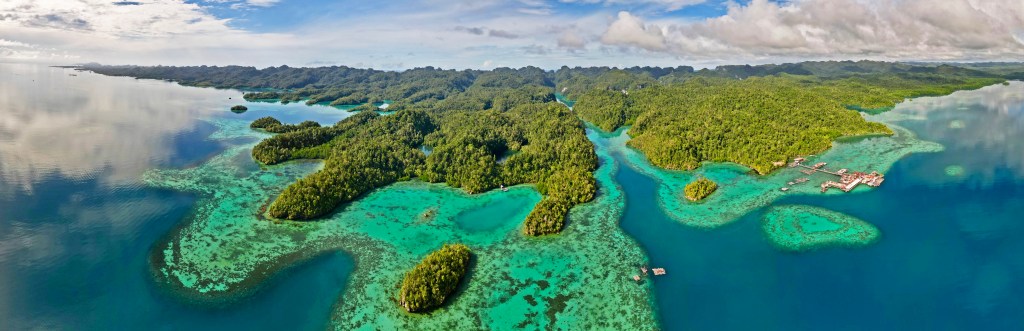
Imagine boarding a boat and sailing through turquoise waters surrounded by green islands that sparkle like gemstones in the sea. This or something similar could be used to describe Raja Ampat, one of the last paradises on earth. Raja Ampat is an archipelago in the Indian Ocean consisting of over 1,500 small islands, skerries and shoals. This fascinating region in West Papua, Indonesia, is known for its untouched nature and breathtaking underwater world.
A real diver’s dream
West Papua is an absolute dream destination for divers. The coral reefs are vibrant and colorful, populated by an incredible variety of marine life. Over 1,300 species of fish and 600 species of coral make this area one of the most biodiverse marine ecosystems in the world. As soon as you dive down, you are surrounded by a bright parade of fish, rays and even sharks. Sometimes you will also come across a majestic sea turtle or a manta ray gliding leisurely through the water.
There is also plenty to discover above water!
But West Papua is not just a paradise for divers. The islands also offer numerous adventures on the islands. Explore the dense jungle, populated by exotic birds, and hike to hidden waterfalls that cascade from the green hills. The flora and fauna of the islands are just as impressive as the underwater life.
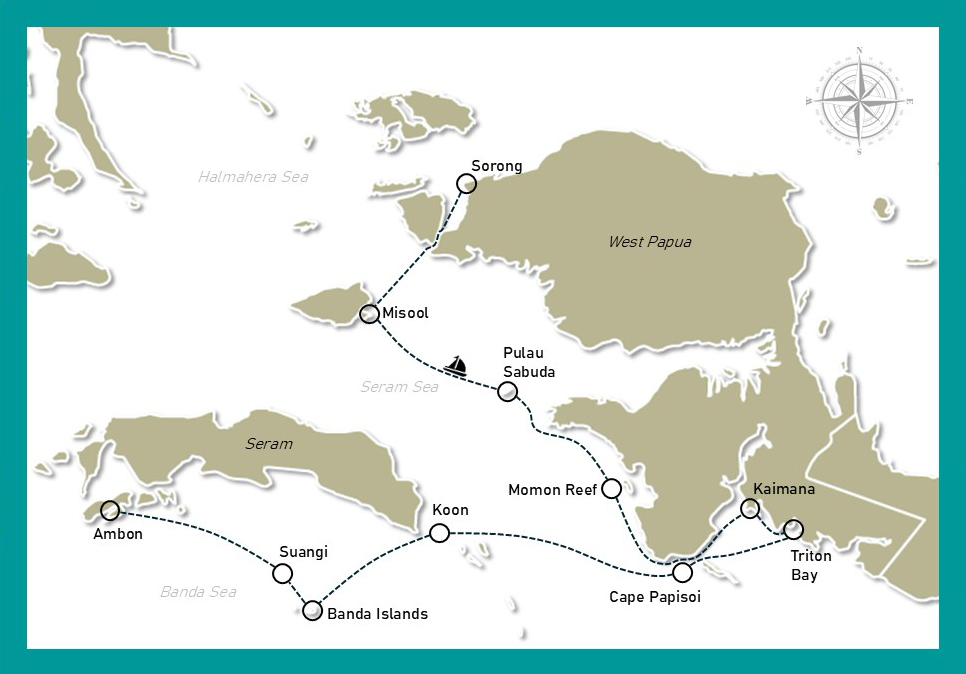
From big fish hotspots to macro paradise: A diving safari on the route Sorong – Misool – Kaimana – Triton Bay – Banda Islands – Ambon
In addition to classic liveaboards that start and end in Raja Ampat, there are also one-way tours that start and end at different ports. Our tour starts in Sorong, then heads south via Misool to Kaimana and Triton Bay, and finally continues via the Banda Islands to the Moluccas and ends after 14 days in Ambon. This tour promises a perfect combination of the colorful reefs of Raja Ampat, paired with first-class wall dives at the Banda Islands, the whale shark hotspots off Kaimana, as well as the macro paradises off Ambon and Triton Bay.
The M/V Tambora – a safari ship in traditional Indonesian style
The M/V Tambora is a 42-meter long two-masted sailing vessel in the classic Indonesian Pinisi style. With only eight spacious guest rooms, it offers a cozy environment that guarantees personal attention and an individual atmosphere while diving in Indonesia.
Each room on board the M/V Tambora is designed to offer the utmost comfort, with air conditioning, en-suite bathrooms and ample storage space. The common areas, including a lounge, dining room, sundeck and dedicated camera room, are designed to relax and entertain after a spectacular day of diving.
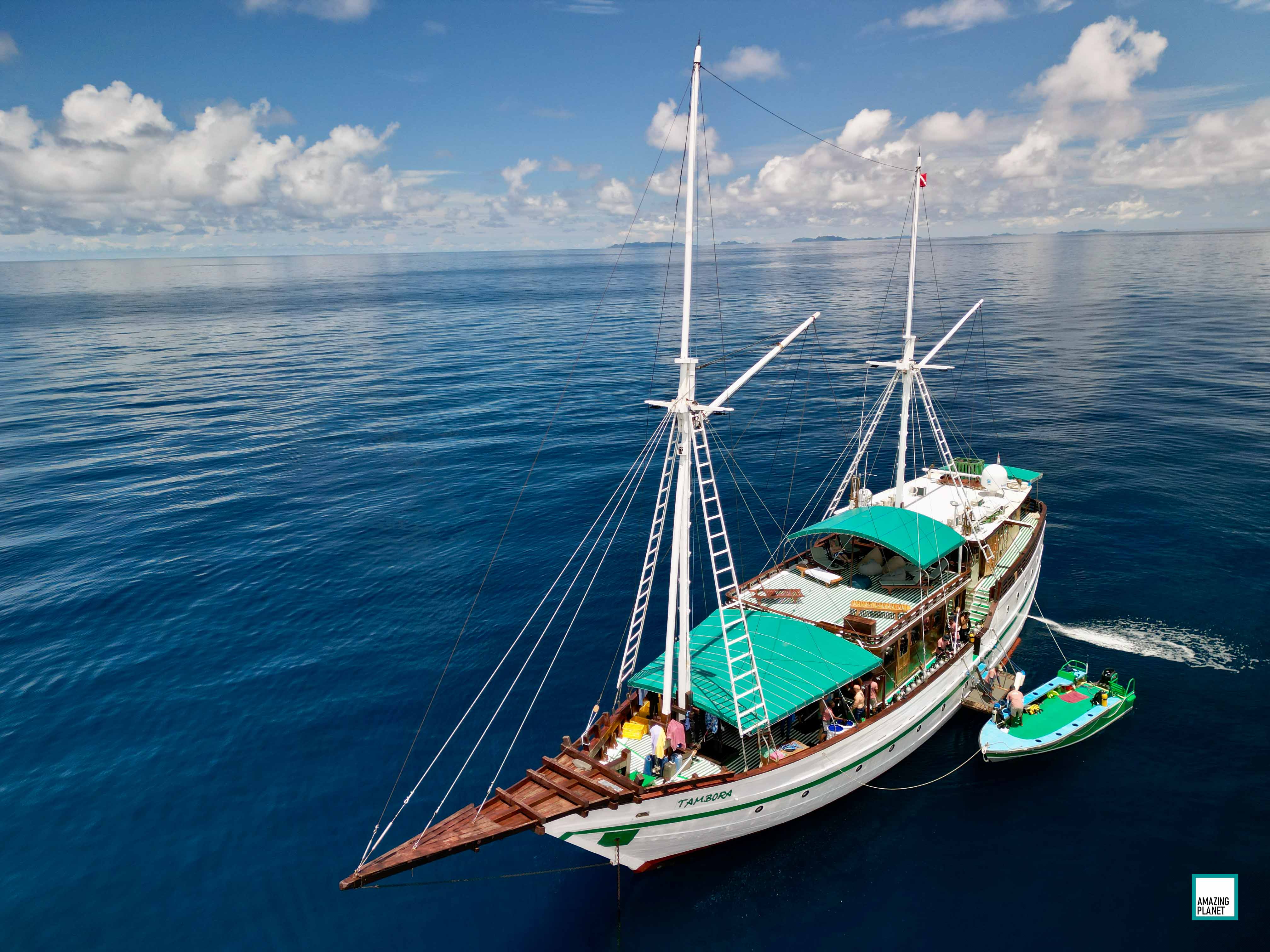
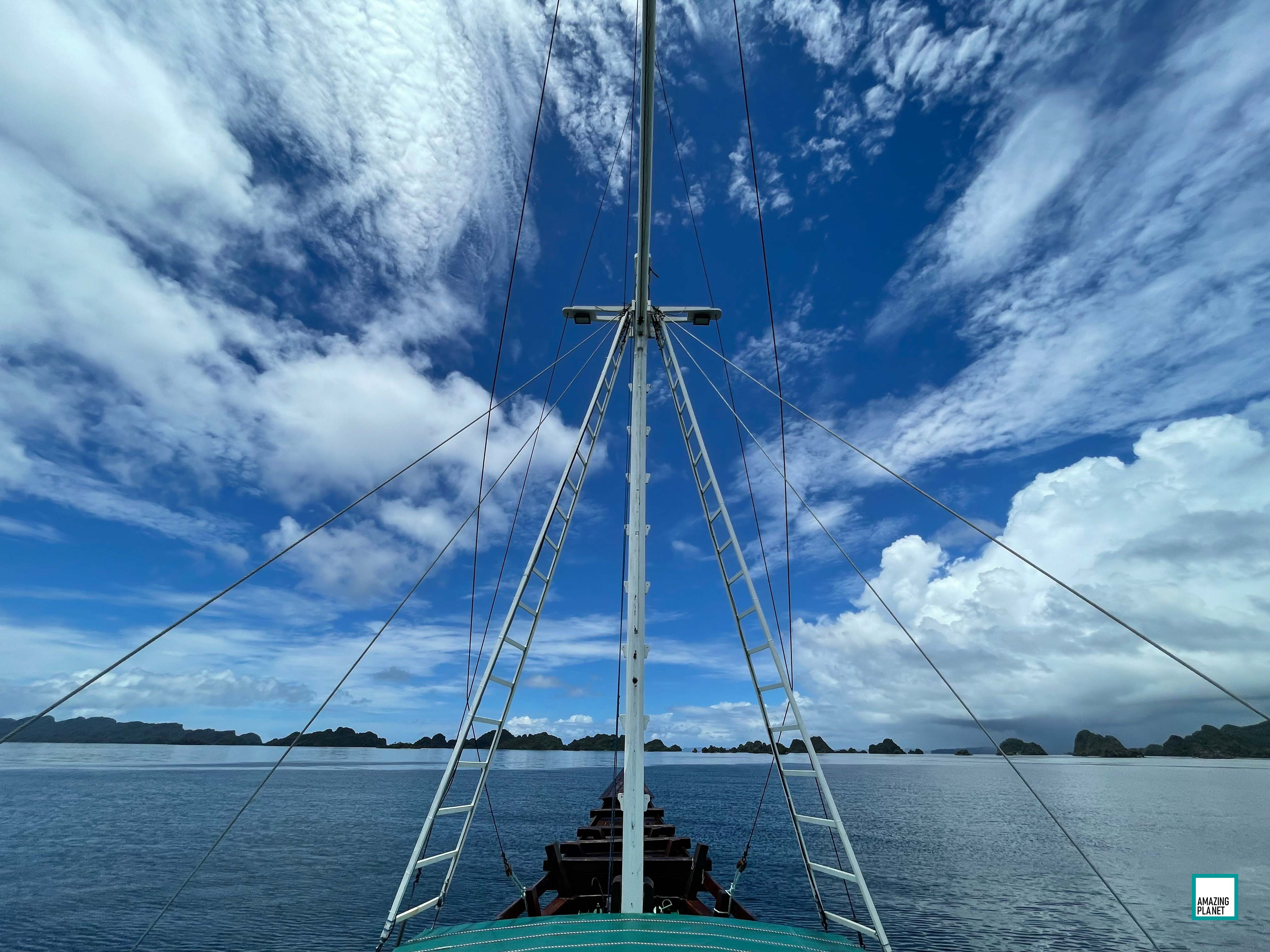
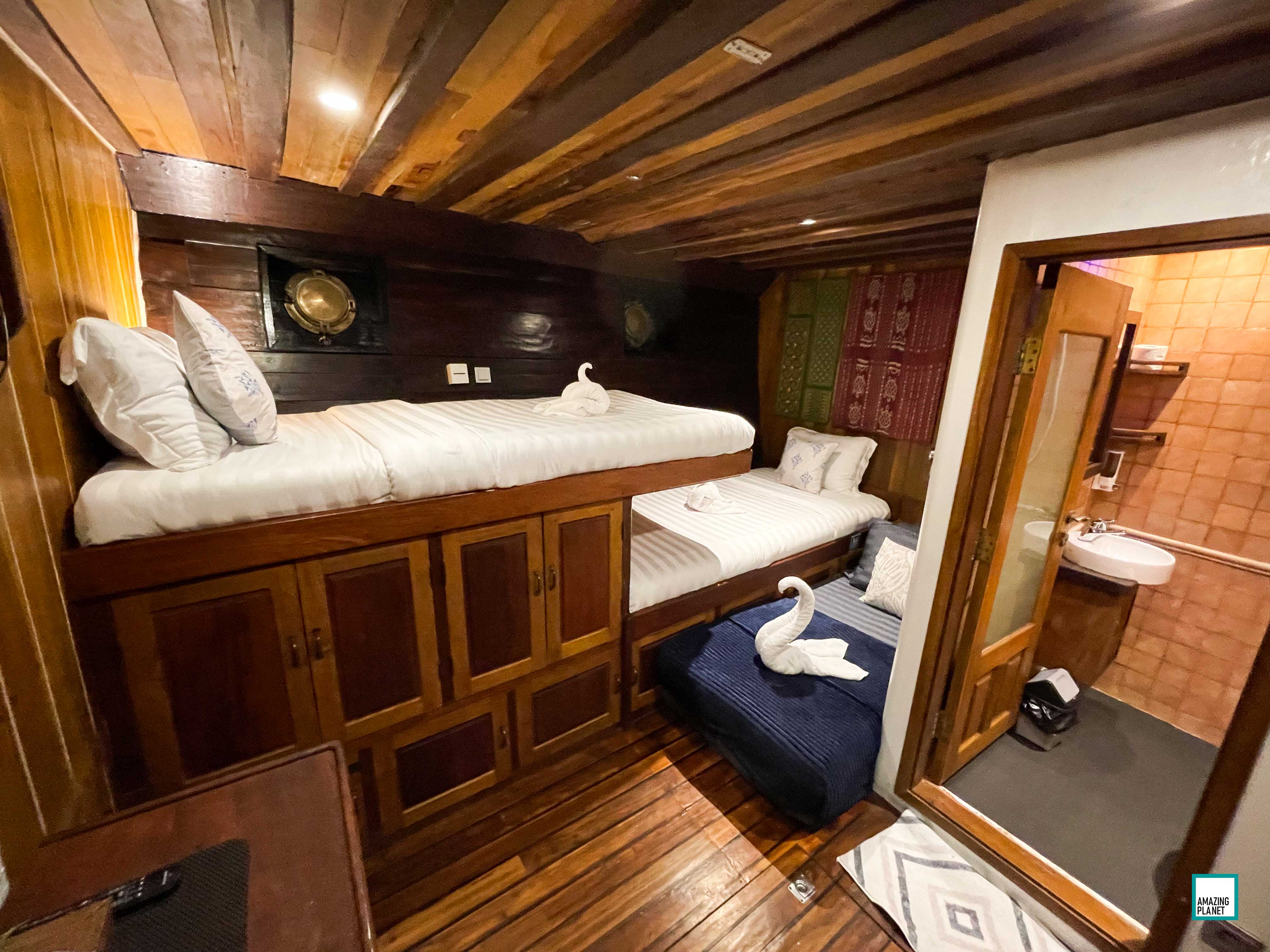
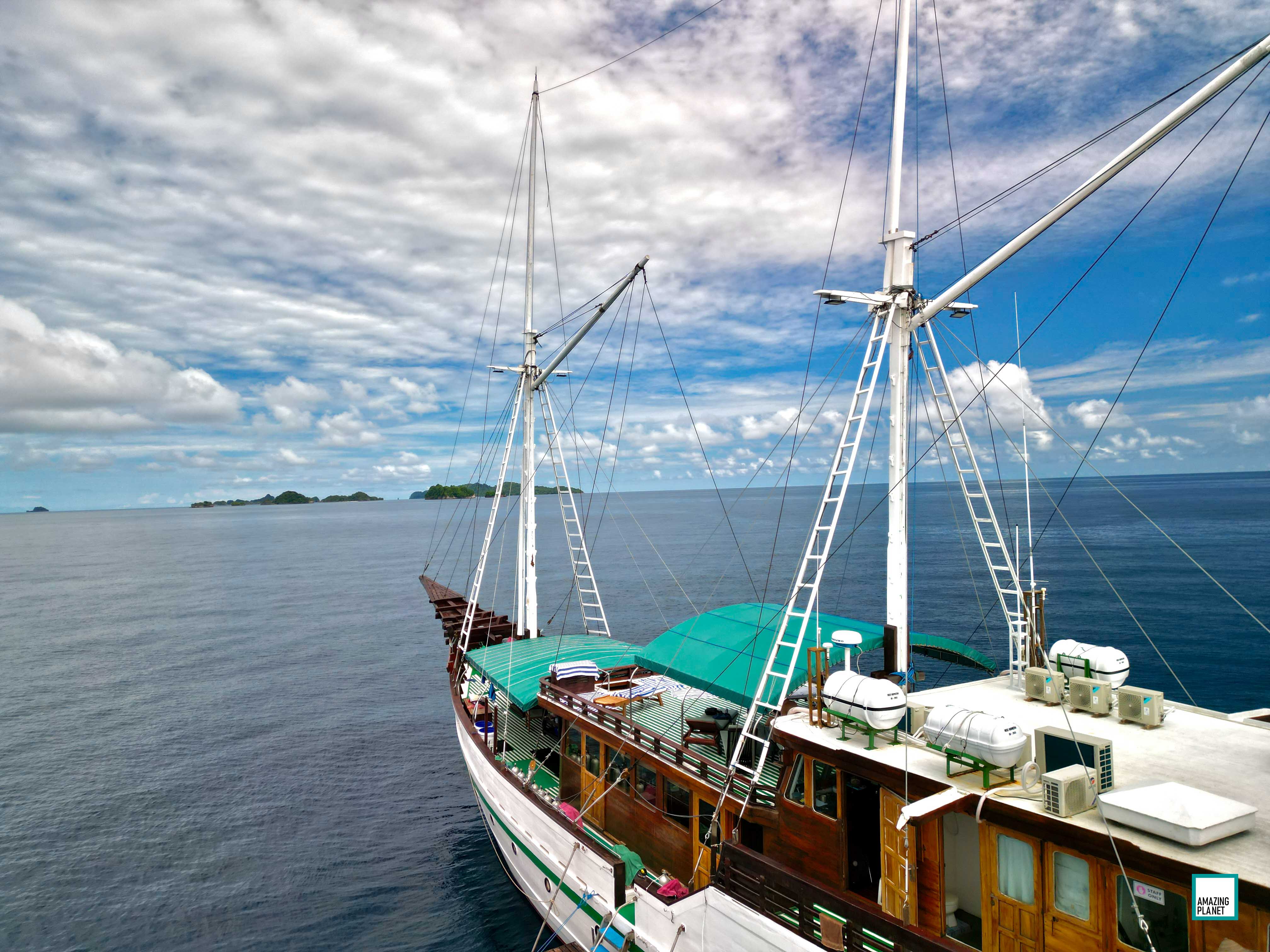
The M/V Tambora in the classic Pinisi design combines Indonesian tradition with diving adventure
Stage 1: From Sorong to Misool
On our arrival, we are warmly welcomed on deck by the crew of the M/V Tambora with a chilled watermelon shake. After a very long journey of more than 30 hours travelling from Europe to Sorong, the atmosphere on board is relaxed. After a detailed boat and dive briefing, the diving equipment is set up, the anchor is lifted and we set course for Misool, which we reach the next morning. There are several flights a day from Jakarta to Sorong, for example, with Garuda Indonesia or Batik Air.
Arriving in Misool the next morning, the first dive is on the program. We are immediately greeted by crystal-clear visibility, countless schools of fish, turtles, reef sharks and a blaze of color on soft and hard corals that is rarely seen elsewhere. Some lucky divers spot manta rays or a walking shark on the very first day.
We spend a total of three days in Misool and dive at top dive sites such as Boo Windows, Nudy Rock and Yilliet Kecil. For a change between dives, we visit one of the Jellyfish Lakes, a stalactite cave or take boat trips between the limestone rocks.
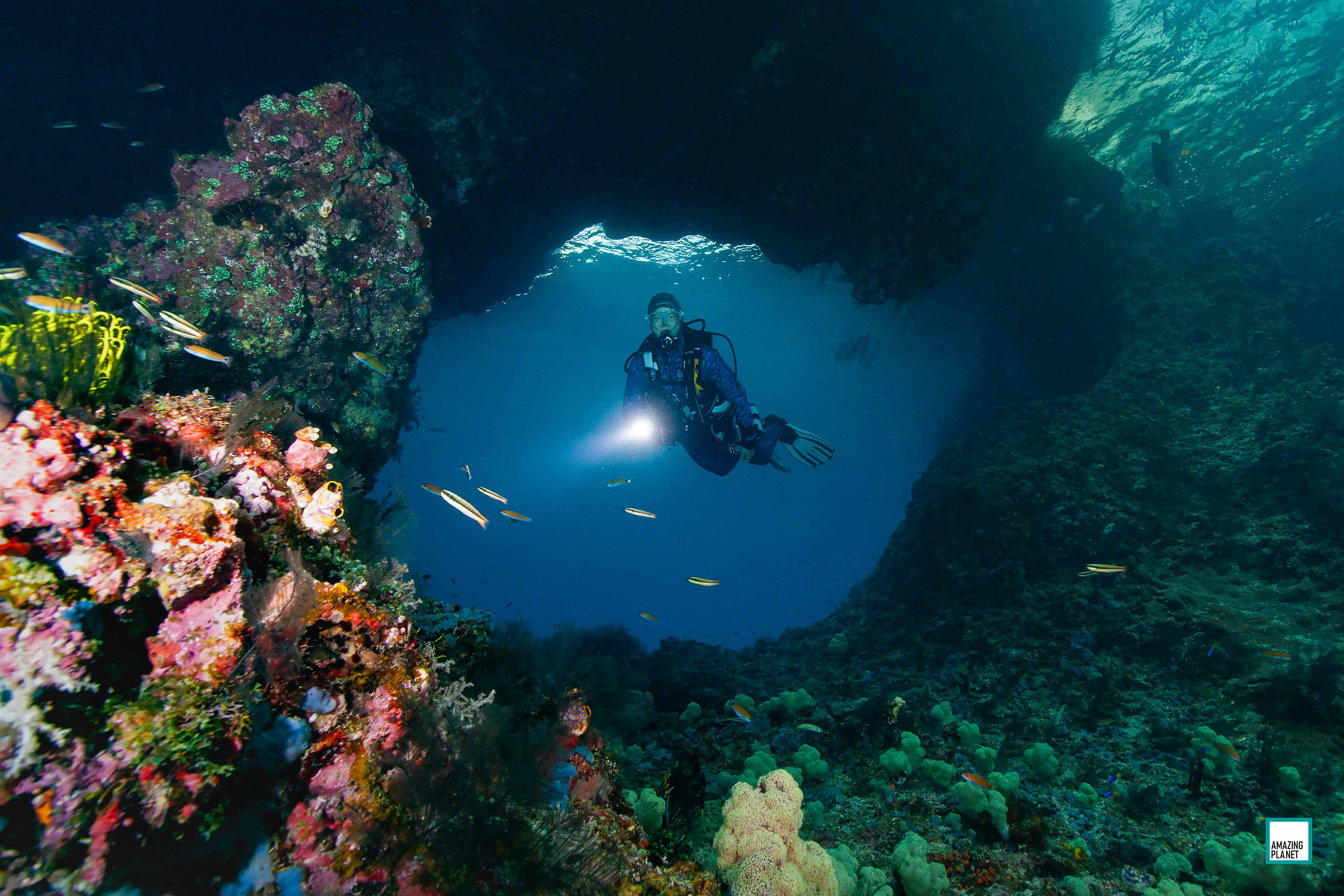
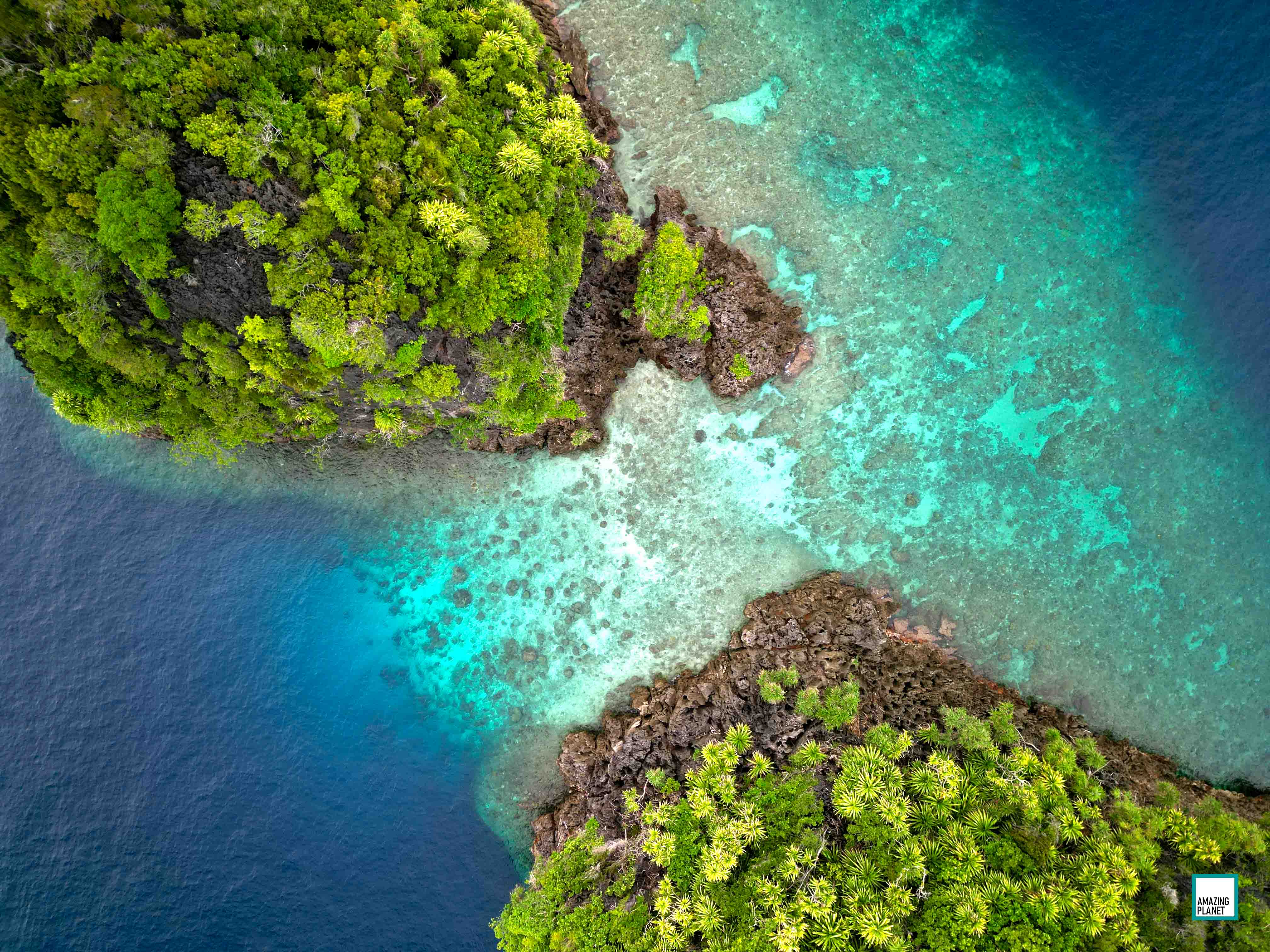
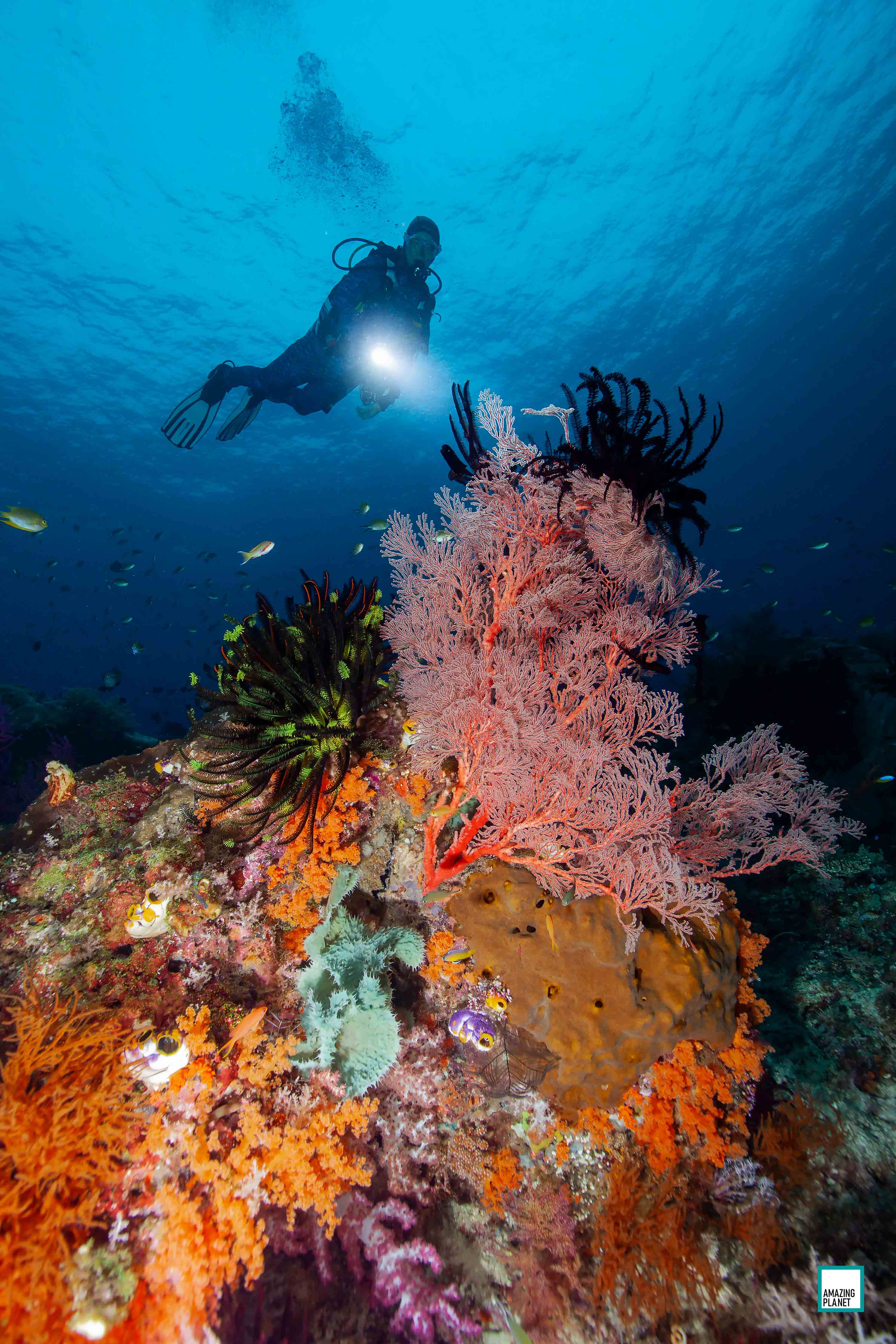
Typical images of Misool: rock formations and a blast of colors underwater
Stage 2: From Misool via Kaimana to Triton Bay
The next destination on our tour is Kaimana and Triton Bay. Due to the rather long crossing, dive stops are made en route at Pulau Sabuda and Momon Reef. While there are mainly macro creatures to marvel at below the surface at Pulau Sabuda, the islands above the water offer beautiful bays and secluded beaches.

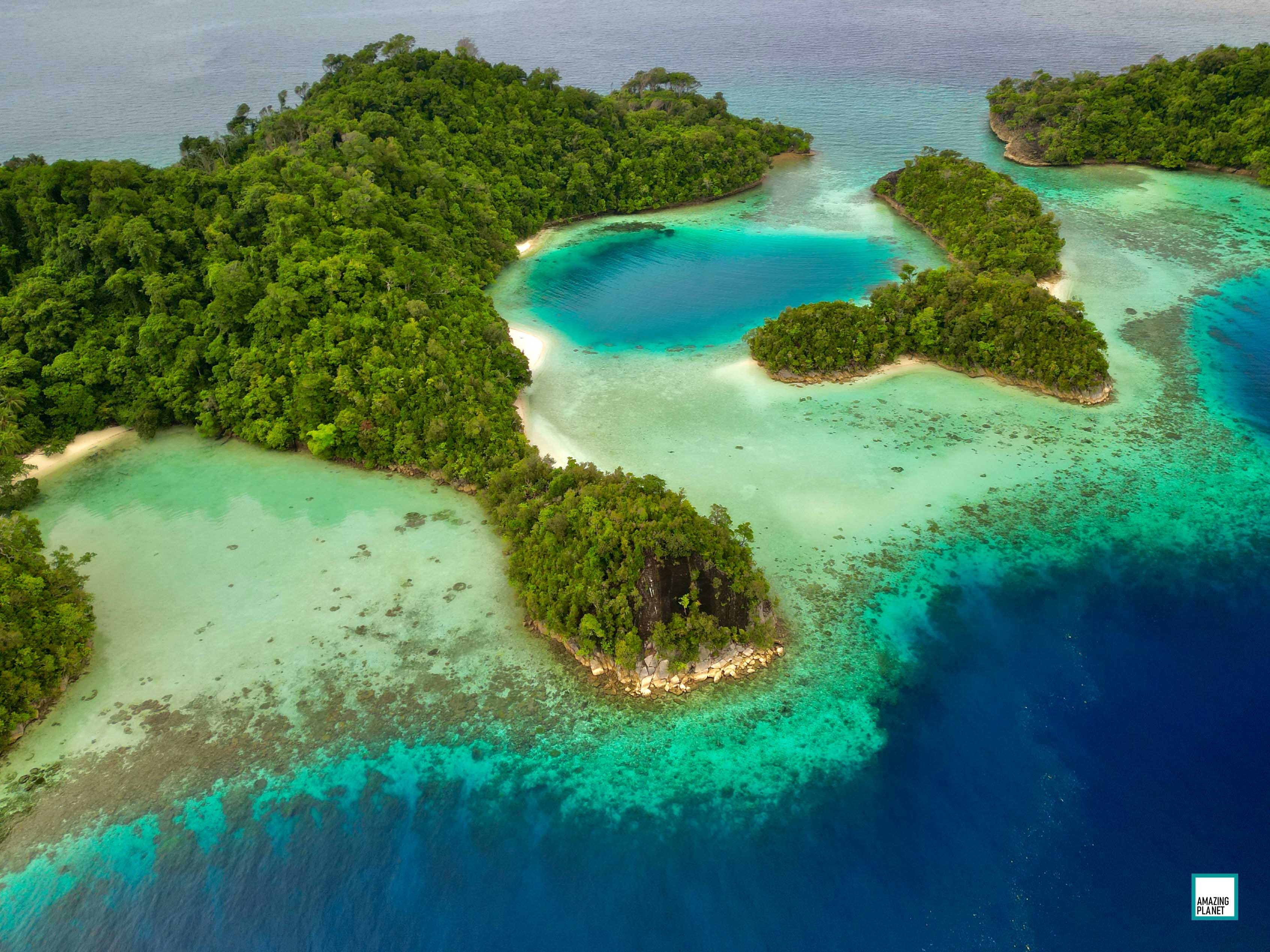
The deserted islands and beaches of Pulau Sabuda
Momon Reef is a real insider tip. Although no longer located in the Raja Ampat protected area, this reef is a real surprise due to its location far away from any civilization. Incredible visibility, huge schools of fish and oceanic manta rays circling comfortably above the reef and the cleaning stations leave us grinning as we emerge from the water after the dive. After two dives on this reef, we continue overnight towards Kaimana, where another highlight of the tour awaits us.
Kaimana is known for the fact that the bagans (a kind of raft with nets in the water for storing freshly caught, still-living fish) of the local fishermen are popular with whale sharks, who see the small sea creatures that escape through the nets as a meal. While you can snorkel and/or dive here as you please, with a bit of luck you can see several whale sharks at once. With a little more luck, dolphins may also come by for a snack from time to time.
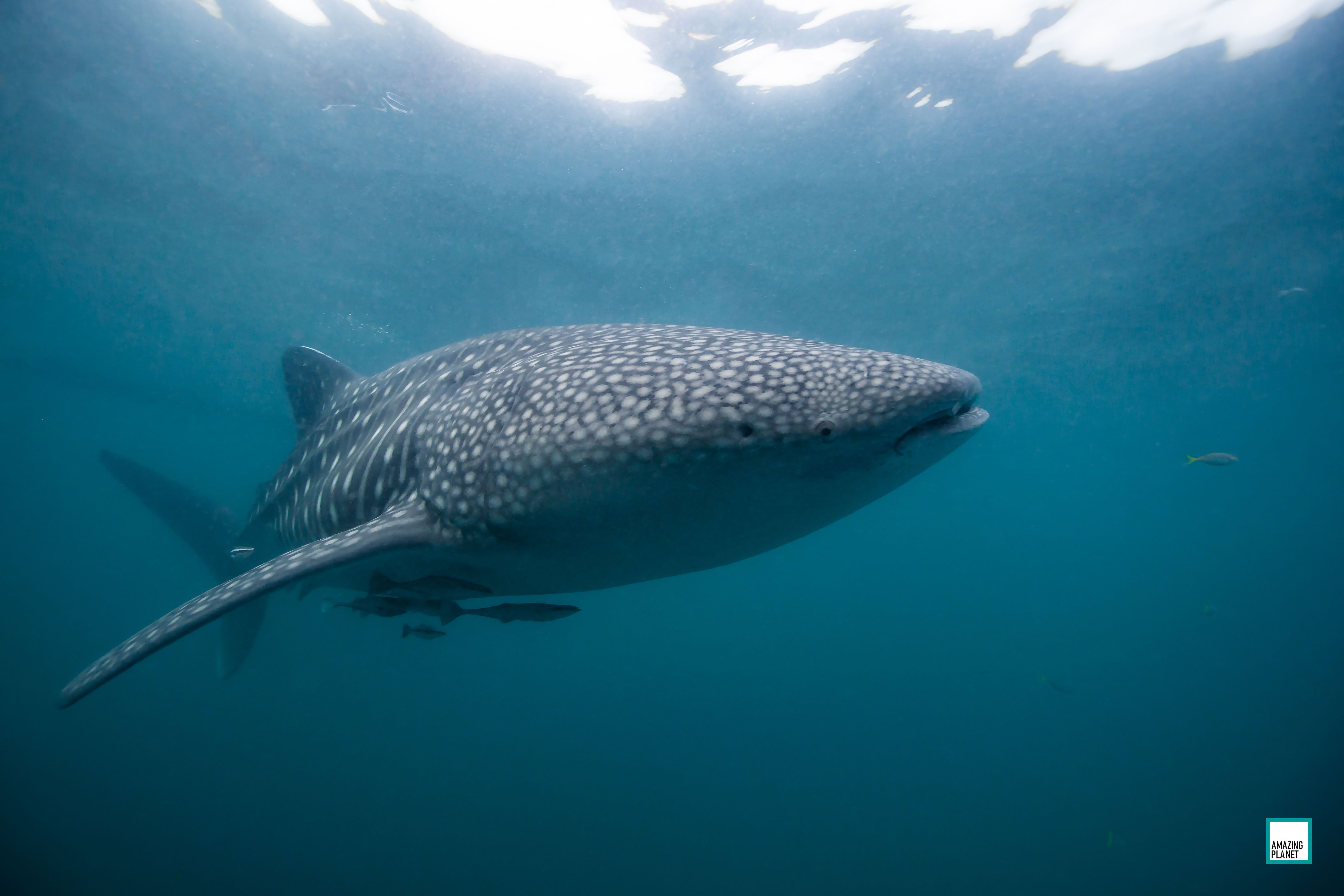
Whale shark encounters at the Bagans off Kaimana are almost guaranteed
After spending the whole day with the whale sharks, we continue overnight towards Triton Bay. This impresses with its incredible wealth of small marine life. From various nudibranchs, crabs, frogfish and ghost pipefish to pygmy seahorses and ghost moray eels, there is everything a critter and macro heart could desire!
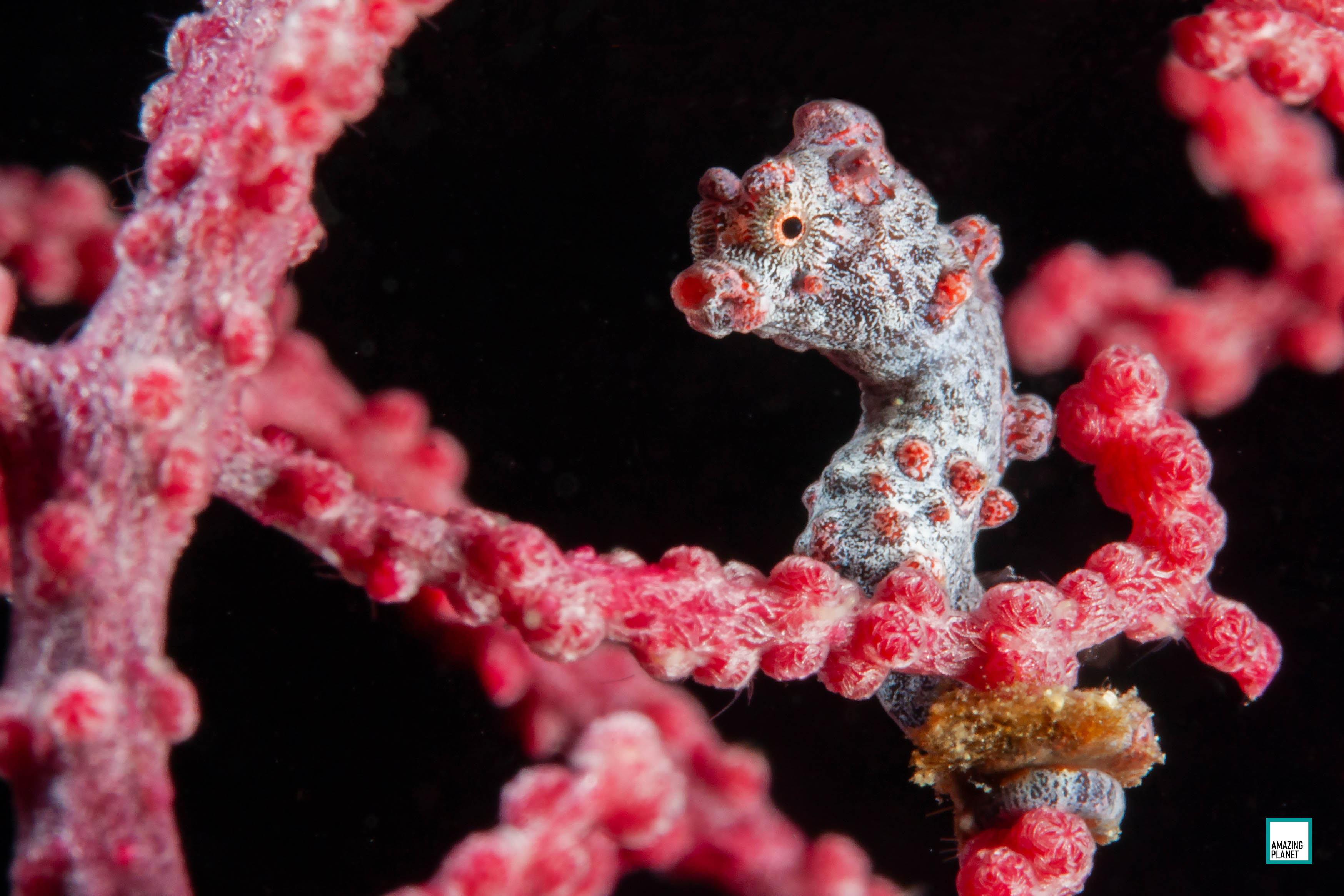
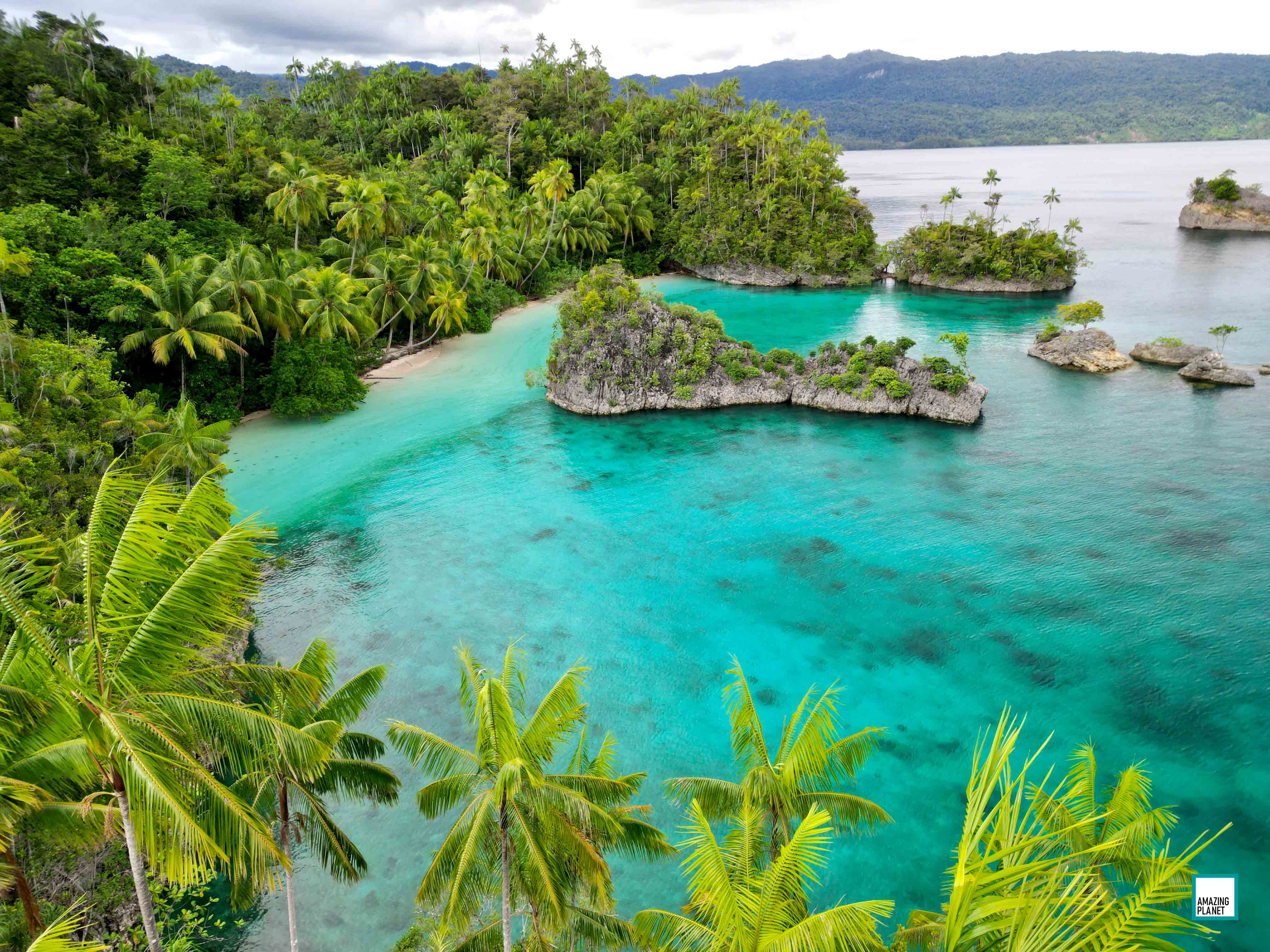
In Triton Bay, divers can expect fabulous macro life and tropical bays with secluded beaches
Stage 3: From Triton Bay to the Banda Islands
After reaching Triton Bay, the easternmost point of our tour and therefore also the halfway point, the next destination on the plan are the Banda Islands. Due to the long distances involved, we take our first break to dive at Cape Papisoi. A varied picture of large and small sea creatures awaits us there on two dives. Countless pygmy seahorses (including Pontohi pygmy seahorses), rocking fish, wobbegongs, eagle rays and bumphead parrotfish sweeten the necessary stopover.
We then continue westwards through the night until we reach the Moluccas near the uninhabited island of Koon the next morning. Here, Indonesia’s underwater world reveals itself with an array of steep walls, sea snakes, turtles, schools of barracuda and batfish. After a total of three dives, we head west in the afternoon so that we can drop anchor off the Banda Islands the next morning.
Known as the “Spice Islands”, the Banda Islands were once the only places in the world where nutmeg grew, making them a center of the international spice trade in the 16th and 17th century. The islands consist of ten small volcanic islands surrounded by lush tropical vegetation and spectacular coral reefs. In addition to world-class diving sites, this region is also a popular destination for history buffs, who can marvel at the well-preserved relics of the colonial past. On a shore excursion, we also have the chance to visit the history and preserved relics of the colonial era.
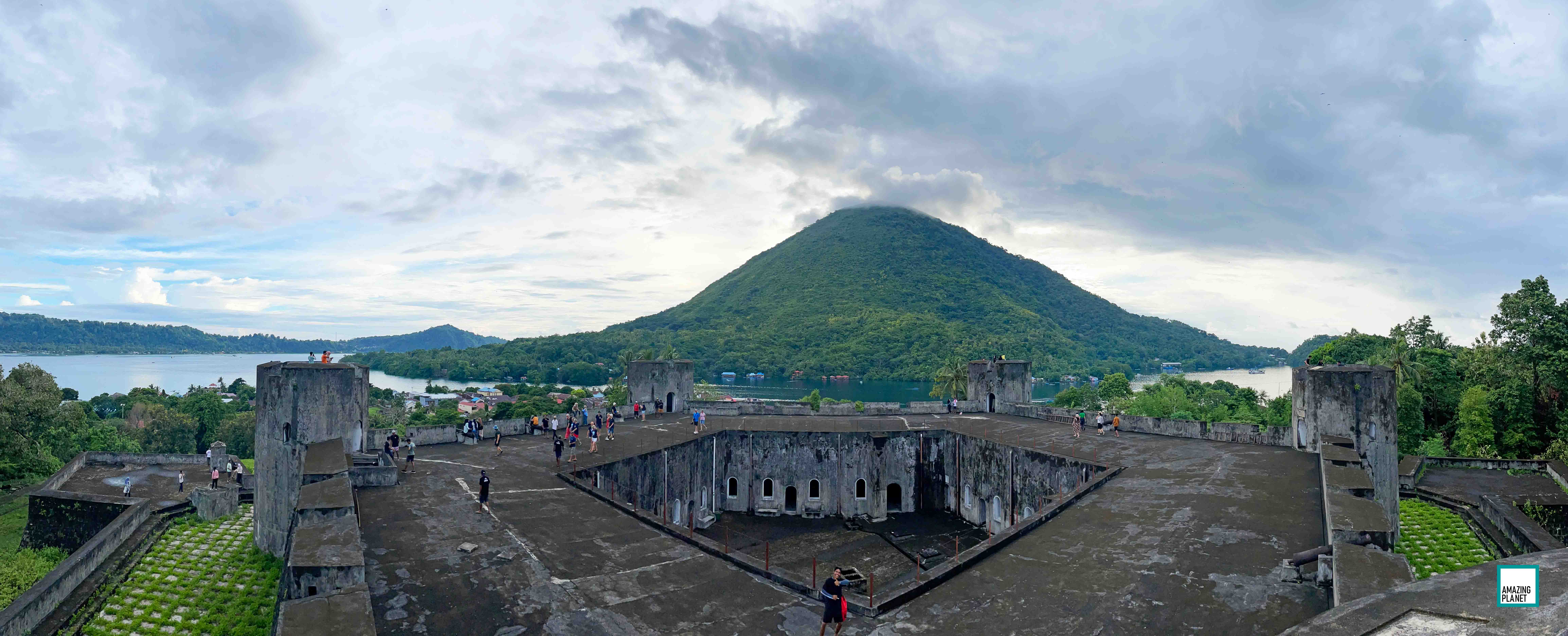
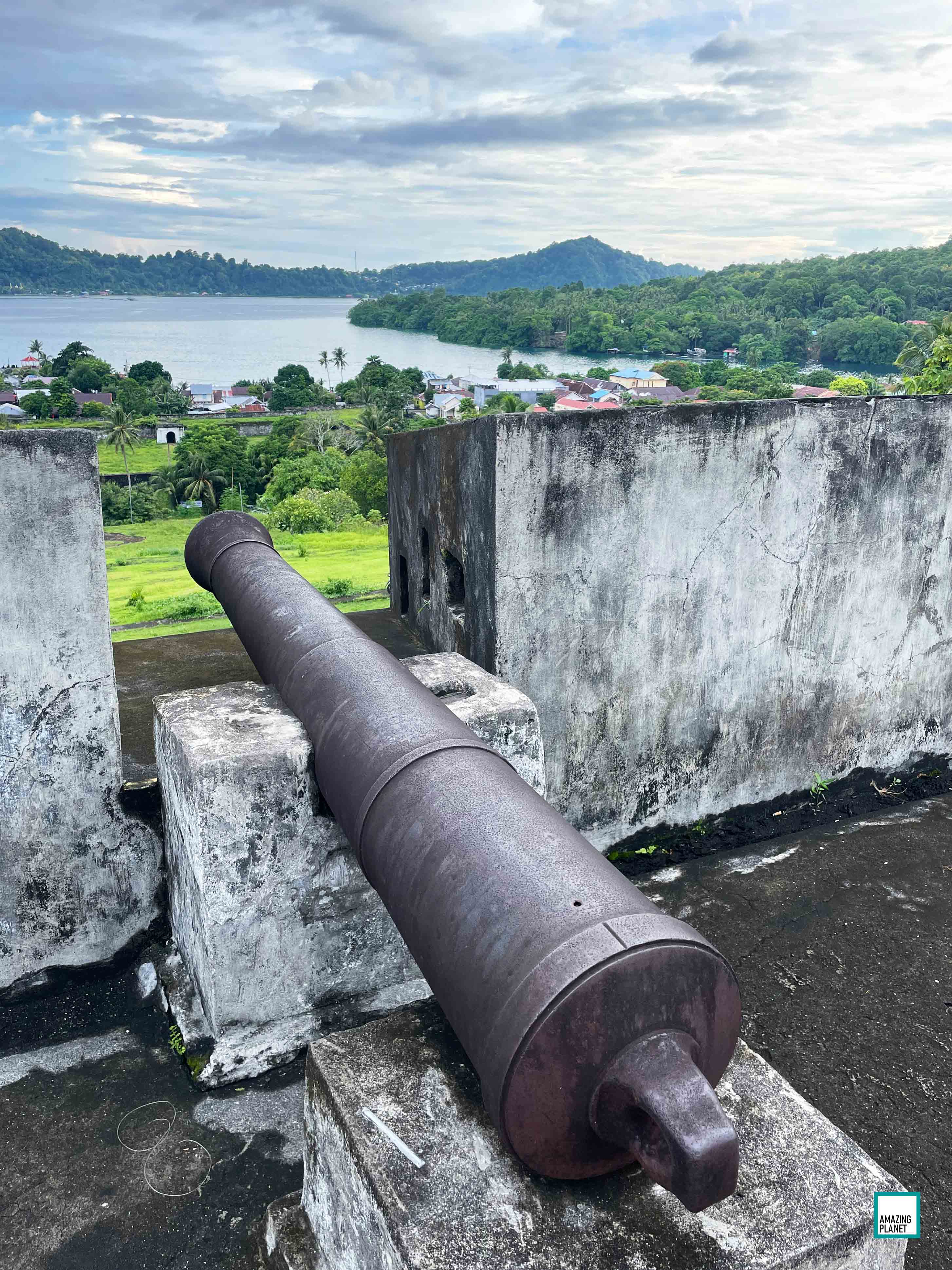
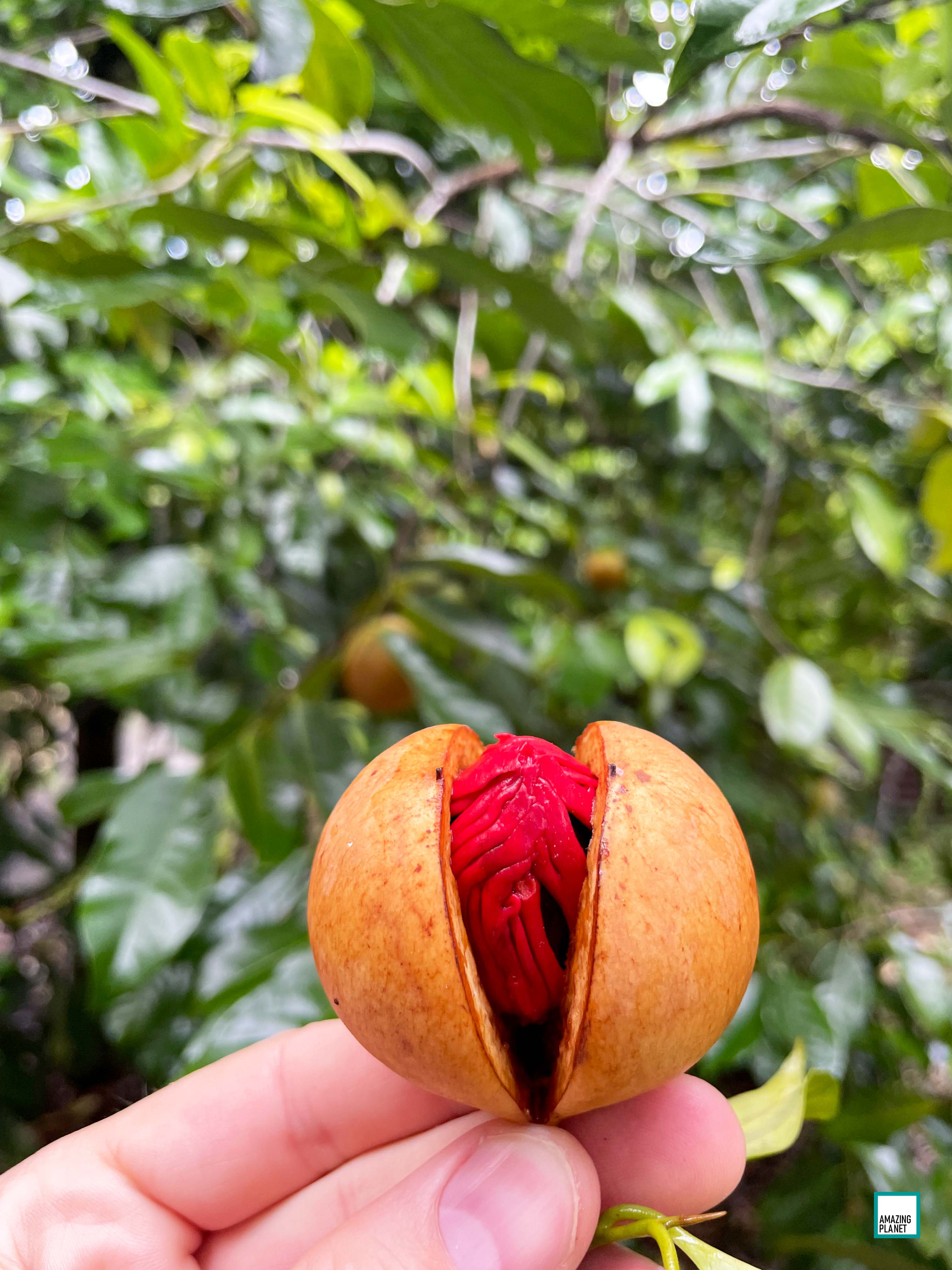
In colonial times, nutmeg made the Banda Islands a global center for spice cultivation. Even today, some plantations and fortifications bear witness to the former importance of these small Moluccan islands.
The Banda Islands score highly not only on the islands themselves, but also in terms of diving. Shoals of barracudas and bumphead parrotfish accompany us on the steep wall dives with numerous hard corals and meter-high barrel sponges around the volcanic islands. Openings and tunnels in the reef walls invite us to explore. Lava formations now beautifully overgrown with staghorn corals bear witness to the last eruption of the Banda Api volcano (right next to Banda Neira) in 1988.
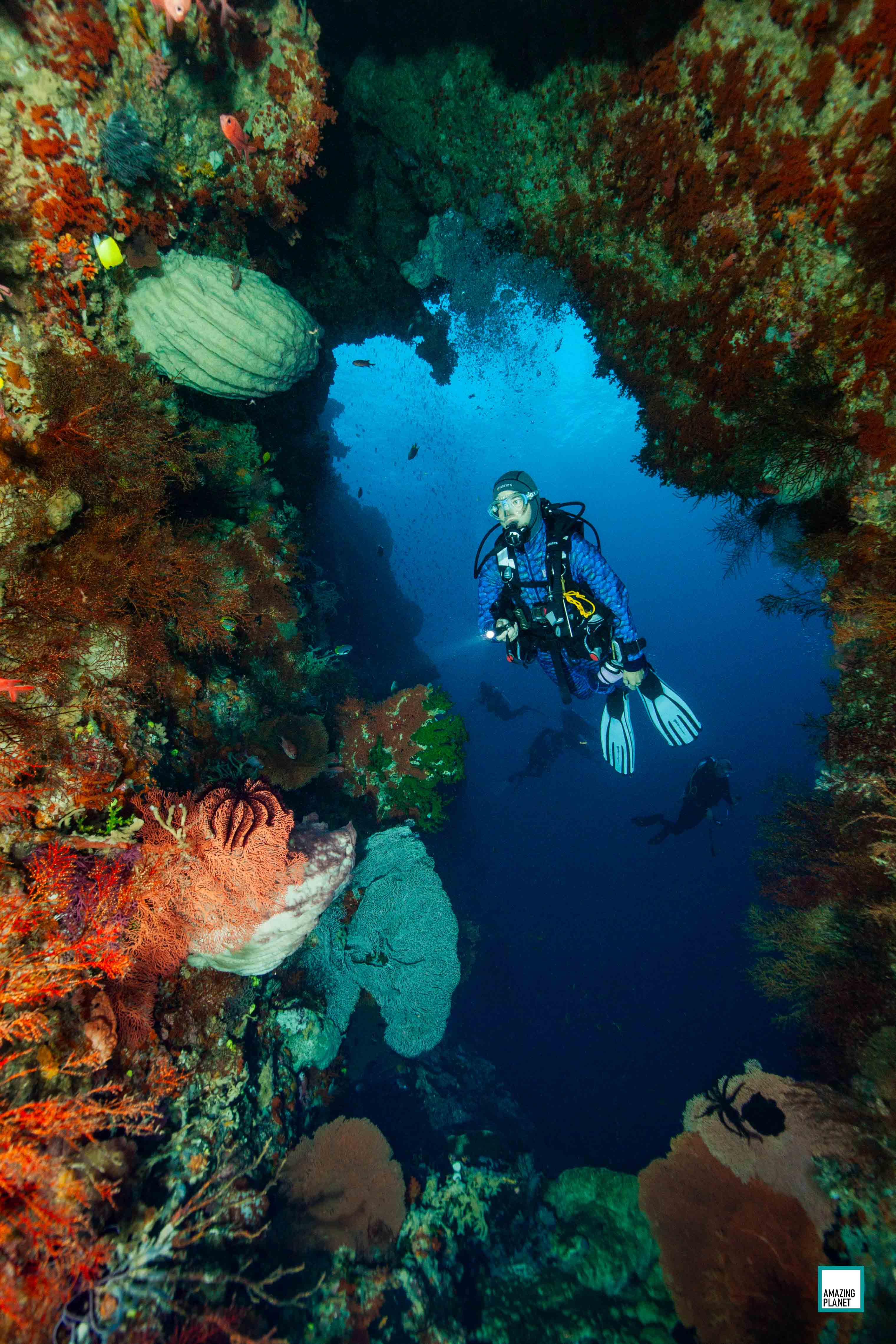
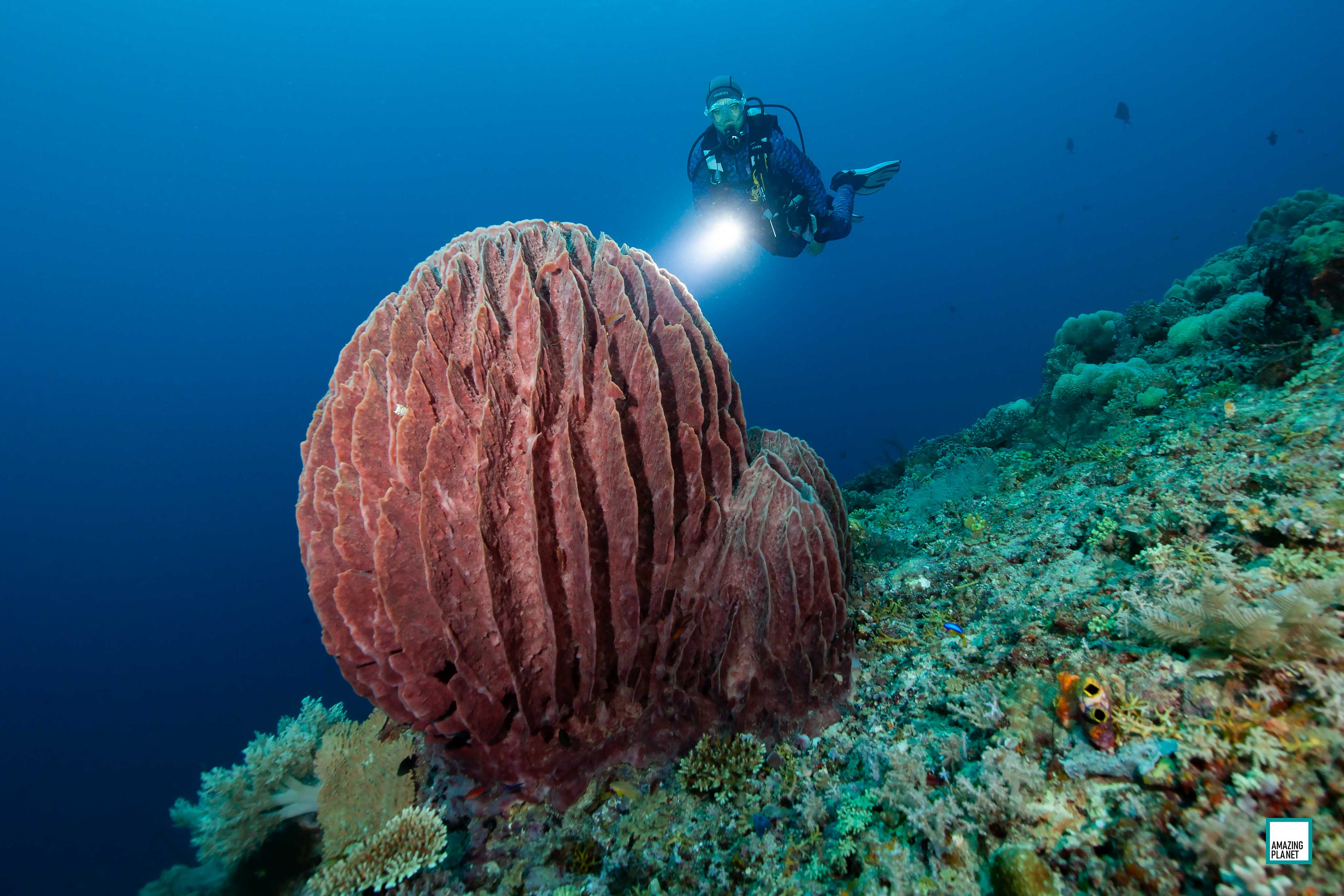
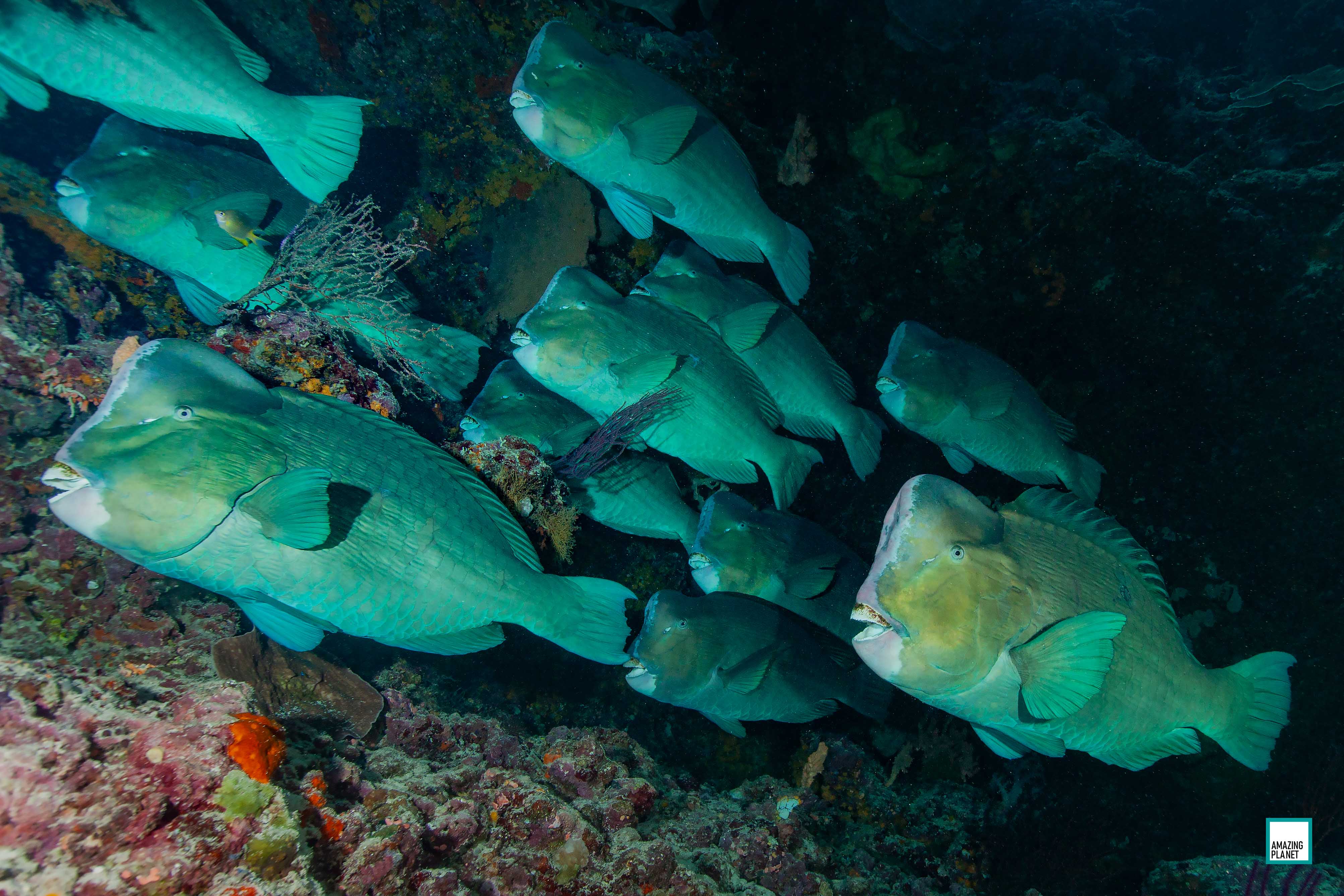
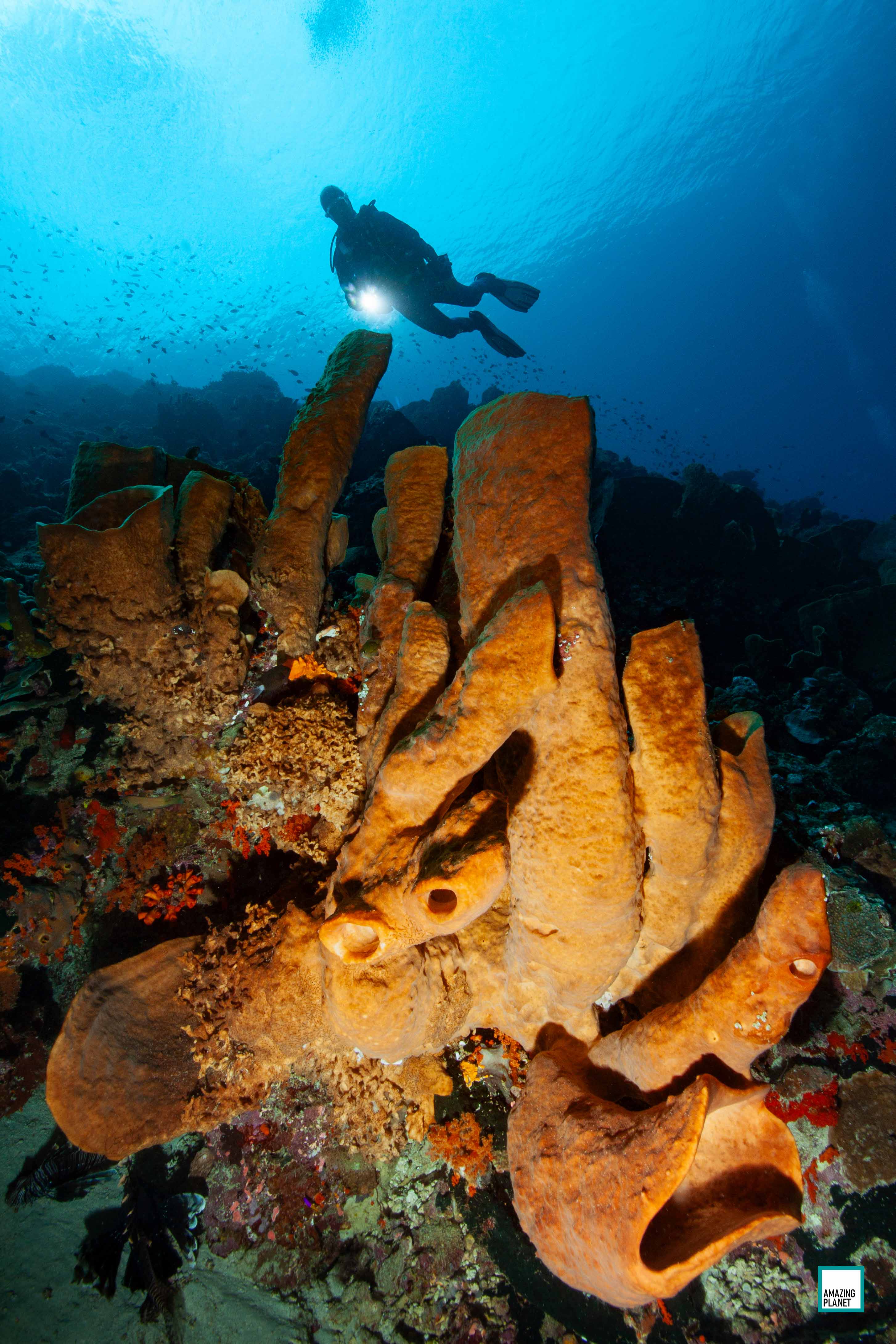
The Banda Islands impress with great visibility and steep walls with huge sponges and schools of fish
Stage 4: From the Banda Islands to Ambon
The last stage of our tour goes from the Banda Islands northwards via Suangi and Nusa Laut to Ambon. At the right time of year (October – November), when the water in the Banda Sea is a little cooler, you have a very good chance of seeing schools of hammerhead sharks, sunfish, marlins and even whales. During our tour in April, however, the water temperatures are too warm for such spectacular encounters with big fish, so we enjoy the dives in the presence of reef sharks, turtles, barracudas, bumphead parrotfish and sea snakes. Ambon, the last point of our trip, is one of the best muck diving sites in the world and is therefore a worthy end to the tour.
Conclusion
The liveaboard tour to Raja Ampat and the Banda Sea is more than just a diving safari – it’s an excursion into another world. It’s a journey where nature shines in its purest form, history can be experienced first hand and adventure lurks around every corner. Whether you are an experienced diver looking for new challenges or just someone who wants to enjoy the beauty of nature, Raja Ampat and the Banda Sea will enchant you and leave you with unforgettable memories.

 amazingpla.net
Leave a comment